

Meta Description: Many cobot brands claim full-material universal welding. We uncover the real welding quality gaps between carbon steel, stainless steel and aluminum with actual workshop tests and ReadyOn collaborative welding robot cases. Leave your questions in our blog comment section.
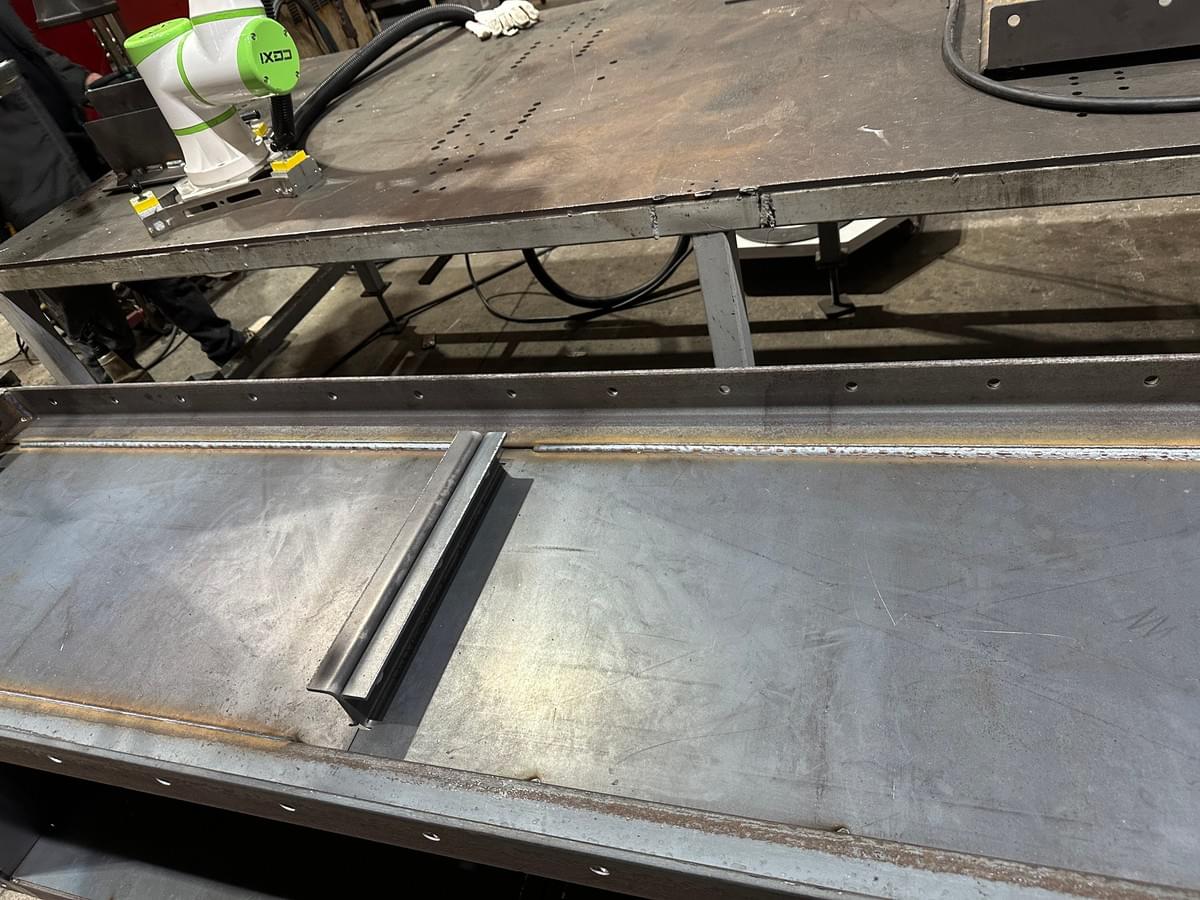
Introduction
Almost all collaborative welding robot manufacturers advertise “full-material universal welding” in product promotion, claiming that one single cobot welding station can perfectly h andle carbon steel, stainless steel, aluminum alloy and various metal workpieces. For metal fabricators with multi-material mixed orders, this selling point sounds extremely cost-effective and attractive.
However, most factory engineers encounter obvious quality differences in actual production. Some cobots perform stably on carbon steel but produce massive pores and poor fusion on aluminum; some equipment delivers beautiful stainless steel welds yet suffers severe deformation on thin plates. This raises a controversial industry question: Is universal material welding a real industrial capability, or just an exaggerated marketing gimmick?
Based on actual workshop test data and overseas project verification, this article objectively analyzes the essential welding differences between carbon steel, stainless steel and aluminum alloy, and reveals how ReadyOn collaborative robot welding units achieve true multi-material adaptive welding through targeted algorithm and process optimization.
Core SEO Keywords: ReadyOn collaborative welding robot, universal cobot welding, carbon steel welding, stainless steel welding, aluminum welding automation

Why Most Cobots Fail in Universal Material Welding (Core Technical Differences)
The three mainstream welding materials have completely different physical characteristics, heat conduction rules and metallurgical requirements, which determine that unified parameter templates cannot adapt to all scenarios. Most generic cobot welders lack material-specific adaptive algorithms, resulting in obvious quality gaps:
- Carbon Steel: The most stable and friendly welding material
Carbon steel features moderate thermal conductivity, stable molten pool state and strong parameter tolerance. It is the easiest material for automated welding. Ordinary cobot equipment can basically complete qualified welding effects with standard parameters, with few pores, cracks and unstable fusion problems. The welding bead is neat and the yield rate is high in mass production.
- Stainless Steel: Strict heat-input control required
Stainless steel has low thermal conductivity and slow heat dissipation. Excessive heat accumulation easily causes workpiece deformation, weld oxidation and blackening, and even intergranular corrosion. Generic cobots with fixed welding trajectories and unadjustable arc output often lead to over-burning, discoloration and poor appearance of stainless steel welds, requiring a large amount of post-weld polishing.
- Aluminum Alloy: The hardest material for automated welding
Aluminum has ultra-high thermal conductivity, fast heat loss and extremely unstable molten pool. In addition, the natural oxide film on the aluminum surface has a melting point as high as 2050°C, which is far higher than the aluminum matrix, easily causing unfused zones and slag inclusions. Meanwhile, liquid aluminum is extremely sensitive to hydrogen, prone to dense pores and virtual welding defects. Most ordinary cobots cannot overcome these inherent material problems, resulting in extremely low aluminum welding yield.
In short, the so-called “full-material welding” of ordinary cobots only stays on basic welding completion, not stable industrial-grade qualified welding.
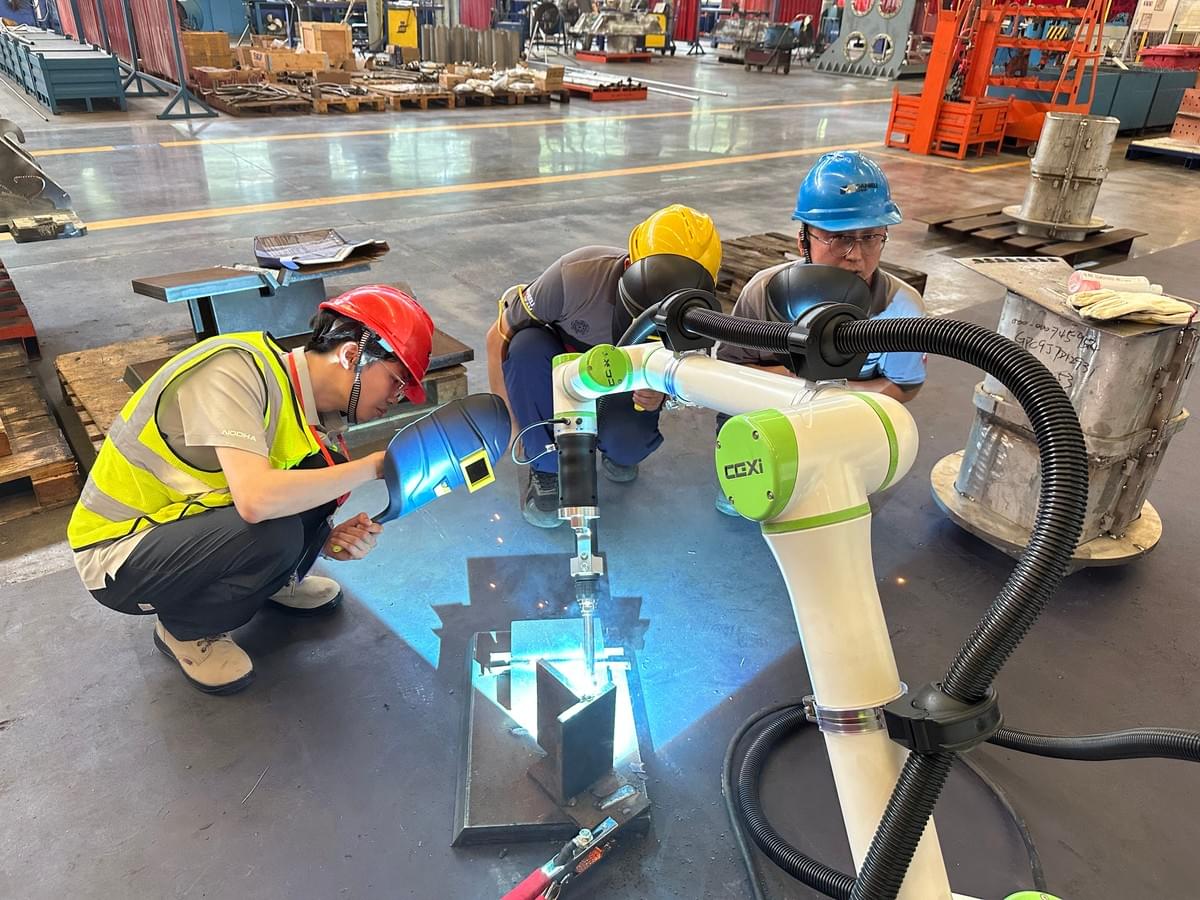
Argument: Can High-Quality Brand Cobots Eliminate Material Welding Gaps?
It is undeniable that different materials have inherent welding difficulties that cannot be completely eliminated. But professional branded equipment represented by ReadyOn collaborative robot welding can greatly narrow the quality gap through customized material adaptation optimization, realizing true industrial-level universal welding capability:
- Carbon steel high-efficiency stable welding: ReadyOn matches high-deposition welding parameters, optimizes wire feeding speed and arc stability, realizes fast welding and low spatter, and maintains consistent weld bead texture in long-term batch production.
- Stainless steel low-deformation & anti-oxidation welding: Equipped with self-adaptive heat input control algorithm, it adopts fast swing welding and segmented heat dissipation logic, effectively avoiding local heat accumulation. The weld is silver-white and bright without blackening or deformation, greatly reducing post-processing workload.
- Aluminum alloy anti-pore & full-fusion welding: ReadyOn’s exclusive aluminum welding process program integrates oxide film breaking technology and precise arc dynamic adjustment, effectively solving common defects such as aluminum welding pores, unfused edges and virtual welding. It stably outputs high-quality welds for thin aluminum plates, aluminum profiles and aluminum structural parts.
Different from generic cobots with universal fixed parameters, ReadyOn presets independent material process databases for carbon steel, stainless steel and aluminum alloy. Users can switch material modes with one click to adapt to mixed-material orders, truly realizing practical universal welding in factory scenarios.

Real Case
A versatile metal processing manufacturer from Southeast Asia, who undertakes mixed orders of carbon steel brackets, stainless steel casings and aluminum structural parts, has been using ReadyOn collaborative robot welding units for multi-material automated welding production.
Before adopting ReadyOn equipment, the customer purchased ordinary generic cobot welders. The equipment performed basically well on carbon steel welding, but had frequent quality problems when switching to stainless steel and aluminum. Stainless steel workpieces were severely oxidized and deformed, while aluminum parts had unstable fusion and dense pores, resulting in a large number of defective products and order delays. The customer was once skeptical about the so-called “full-material universal welding” of cobots.
After upgrading to ReadyOn collaborative welding robot units, the situation was completely improved. By switching the built-in professional material process library with one click, the equipment forms targeted welding logic for different workpieces. In actual long-term production, the carbon steel welding efficiency is significantly improved; stainless steel welds are smooth and non-deformable with no oxidation blackening; aluminum alloy welding basically eliminates pore and unfused defects, and the yield rate is greatly increased.
The customer’s production data proves that although there are inherent welding difficulty gaps between different materials, professional optimized ReadyOn collaborative welding robot systems can effectively cover multi-material production needs, perfectly solving the pain point of frequent equipment replacement for mixed-material orders.
Conclusion
The universal full-material welding advertised by most low-end cobot brands is indeed a marketing gimmick, which cannot eliminate the inherent welding quality gaps between carbon steel, stainless steel and aluminum alloy.
However, professional industrial-grade automated welding solutions represented by ReadyOn collaborative robot welding rely on independent material process databases, adaptive arc control and heat input optimization technology to minimize material welding differences. It realizes stable, qualified and mass-producible universal welding for the three most mainstream metal materials, becoming a reliable automation solution for multi-variety and mixed-order processing enterprises.
When purchasing cobot welding equipment, manufacturers should not blindly believe in universal propaganda. The core lies in whether the equipment has targeted material adaptation capabilities and mature industrial verification.
CTA
If you have mixed welding orders of carbon steel, stainless steel and aluminum alloy and are troubled by unstable welding quality, ReadyOn collaborative welding robot provides free multi-material welding sample testing services. We will conduct targeted process debugging according to your workpieces and provide real welding effect comparison reports. Contact our technical team to customize your exclusive multi-material automated welding solution.
What material welding problems have you encountered with cobot welders? Drop your comments below, and our engineering team will reply to you one by one. If you need free welding sample testing or customized workstation solutions, feel free to contact ReadyOn now.