

Meta Description: Is zero-spatter cobot welding achievable in real workshops? Explore the truth behind marketing hype with real feedback from Israeli clients using ReadyOn collaborative welding robot units. Leave your questions in our blog comment section.

Introduction
Zero-spatter welding has become one of the most eye-catching selling points in the automated welding industry. Almost all cobot welding suppliers promote “100% zero spatter” welding effects in official videos, product brochures and advertising campaigns to attract global manufacturing buyers.
However, countless factory owners and welding engineers have encountered an awkward situation after purchasing automated welding equipment: the perfect zero-spatter effect displayed in laboratory tests cannot be replicated in actual workshop production. Excessive welding spatter still leads to extra grinding work, increased material costs and unqualified workpiece appearance.
This has triggered a heated industry debate: Is zero-spatter cobot welding a practical industrial technology, or just a false marketing gimmick? Based on real workshop production scenarios and verified overseas customer cases, this article reveals the real effect of ReadyOn collaborative robot welding units in actual mass production, and explains why high-quality branded cobots can achieve ultra-low spatter welding that most generic models cannot match.
Core SEO Keywords: ReadyOn collaborative welding robot, cobot welding, zero spatter welding, automated welding workstation.

Argument 1|True Zero-Spatter Welding Only Exists in Laboratory Conditions
Absolute zero-spatter welding is almost impossible to achieve in real factory environments, even with high-end automated welding systems. The so-called perfect zero-spatter effects released by most manufacturers are completed under extreme ideal experimental conditions:
- Strictly controlled experimental environment: Laboratories adopt constant temperature, dust-free and windproof environments, completely avoiding external interference that affects welding stability.
- High-standard raw materials: Test workpieces are precisely polished with zero assembly gaps, paired with ultra-high-purity shielding gas, which is far superior to ordinary workshop production materials.
- Long-term manual debugging: Professional engineers spend hours repeatedly adjusting current, voltage and welding trajectories to capture the optimal single welding effect.
These harsh conditions cannot be replicated in daily factory mass production. Workpiece errors, workshop airflow, material differences and continuous long-hour operation will inevitably produce a small amount of welding spatter. This is the core reason why most low-cost cobot welders fail to meet promotional promises after delivery.
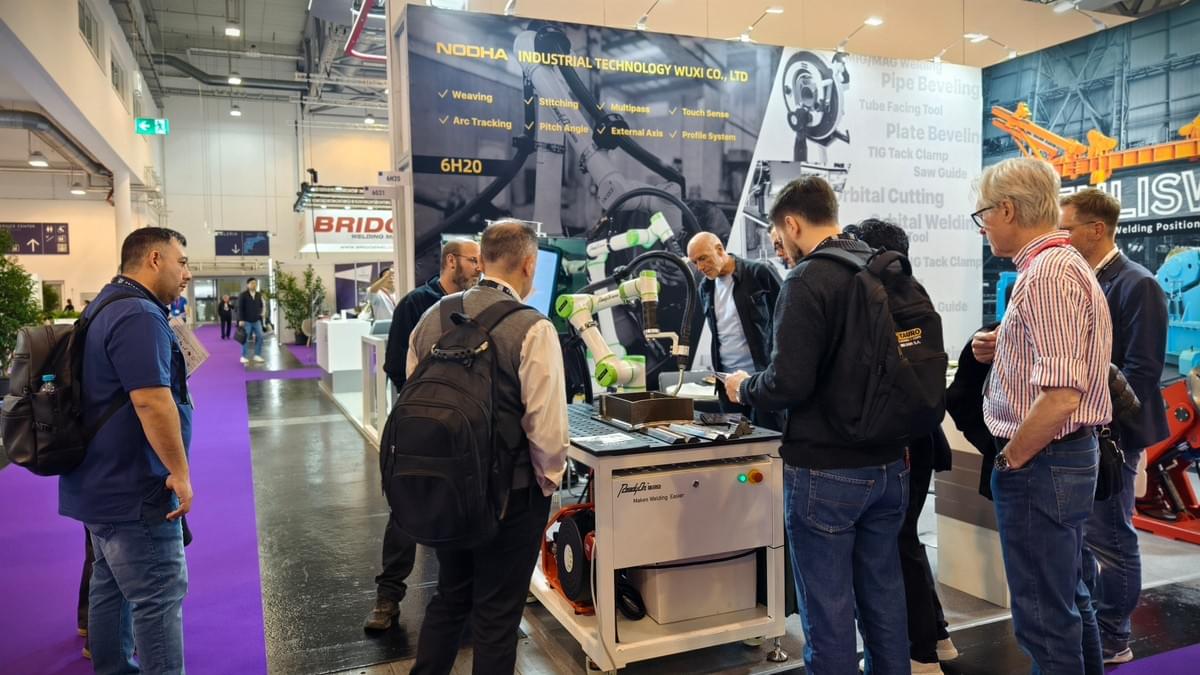
Argument 2|ReadyOn Cobot Welding Achieves Industrial-Grade Ultra-Low Spatter Effect
Although absolute zero spatter is not suitable for industrial batch production, mature optimized automated welding systems represented by ReadyOn collaborative robot welding units can achieve ultra-low spatter effects that meet high-standard manufacturing requirements, completely different from generic low-end cobot equipment:
- Matched integrated welding power system: ReadyOn independently optimizes the matching logic of welding power output and robotic motion trajectory, effectively restraining arc instability and molten metal splashing during welding.
- Adaptive arc control algorithm: The self-developed algorithm stabilizes current and voltage in real time throughout the welding process, avoiding sudden current fluctuations that cause massive spatter.
- Precision vision seam tracking compensation: Equipped with industrial-grade visual modules, ReadyOn welding units automatically correct workpiece deviation and assembly gaps, ensuring stable welding status and reducing irregular spatter caused by positional errors.
- Adaptable to complex workshop scenarios: Aiming at the unstable environment of actual factories, ReadyOn parameters are iterated and optimized for many times to adapt to conventional material errors and on-site environmental interference.
Compared with ordinary welding cobots on the market, ReadyOn’s ultra-low spatter technology can greatly reduce post-weld grinding procedures, save labor costs and improve the overall yield of workpieces.
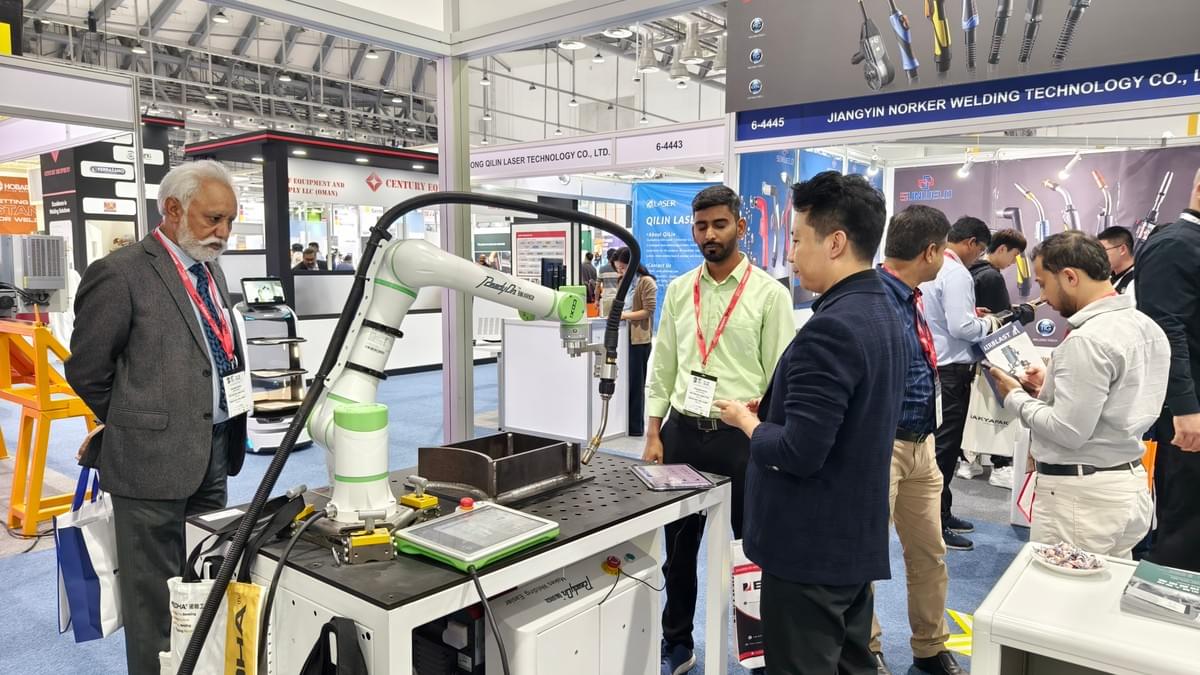
Real Case
One of our Israeli customers engaged in precision metal component manufacturing has officially adopted ReadyOn collaborative robot welding units to solve the long-standing pain point of excessive welding spatter and high post-processing costs.
The customer’s products are mainly used in mechanical equipment and structural parts, with extremely strict requirements on weld appearance and surface finish. Previously, the factory used ordinary automated welding equipment, which produced a large amount of welding spatter every day. The team needed to spend a lot of time on manual polishing and grinding, resulting in low production efficiency and high defective rate.
After investigating multiple brands of cobot welding equipment, the customer finally chose ReadyOn collaborative welding robot units. With the professional parameter debugging and process optimization of our technical team, the equipment operates stably in the customer’s factory for long-term batch production.
Practical production data shows that ReadyOn welding solutions reduce welding spatter by more than 85% compared with the previous equipment. The workpiece surface is smooth and flat after welding, most products no longer need secondary grinding, the factory’s post-processing labor cost is greatly reduced, and the product delivery efficiency and finished product qualification rate are significantly improved. The customer has fully recognized the industrial-grade ultra-low spatter performance of ReadyOn collaborative welding robots in real production scenarios.
Conclusion
Absolute zero-spatter welding is a typical marketing gimmick and cannot be stably applied to industrial mass production. Purchasers should never judge equipment quality solely by laboratory promotional videos.
For actual factory production, ultra-low spatter welding performance is the real valuable technical indicator. As a professional automated welding solution provider, ReadyOn collaborative robot welding units rely on optimized power matching, algorithm iteration and visual compensation technology to achieve stable ultra-low spatter effects in complex workshop environments, helping global manufacturers reduce processing costs and improve welding quality.
CTA
ReadyOn provides free real workpiece welding testing services for global customers. We can provide you with unmodified real welding videos and spatter contrast reports according to your actual workpieces, allowing you to truly understand the ultra-low spatter performance of ReadyOn collaborative robot welding units. Contact our technical team now to customize your exclusive automated welding solution.
What pain points have you met during welding automation transformation? Drop your comments below, and our engineering team will reply to you one by one. If you need free welding sample testing or customized workstation solutions, feel free to contact ReadyOn now.