

Meta Description:Cobots ease global welder shortages while veteran welders tackle complex welding jobs. See how Israeli factories combine manual craftsmanship with ReadyOn collaborative welding robots for higher workshop profits. Leave your questions in our blog comment section.

Introduction
The global shortage of professional welders has become a persistent headache for metal fabrication workshops across Europe, the Middle East and North America. Factory managers rush to deploy cobot welding to fill labor gaps and stabilize mass production output. On the contrary, experienced senior welders firmly believe that manual welding craft cannot be substituted by mechanical equipment in any scenario.
This long-running debate splits factory owners, workshop supervisors and welding technicians. It is incorrect to fully deny the value of manual welding or blindly exaggerate the omnipotence of cobot welding systems. This article objectively sorts out the respective applicable scenarios of manual welding and ReadyOn collaborative welding robots, as well as the most efficient hybrid production mode verified by overseas actual production cases.

ReadyOn cobot welding irreplace repetitive, high-risk manual welding work?
1.Stable & unified welding quality for mass parts
Fatigue, mood difference and operation proficiency will cause inconsistent weld beads during long-time manual welding. ReadyOn cobot welding solidifies welding parameters and motion tracks into the system, delivering identical welding results batch after batch, effectively cutting the reject rate of standard structural parts.
2.Protect workers from harsh welding working environments
Arc glare, harmful welding fume and high-temperature spatter easily trigger occupational diseases for frontline welders. With ReadyOn cobots undertaking the whole welding procedure, workers only need to finish loading, unloading and inspection tasks, greatly lowering enterprise occupational hazard compensation risks.
3.Mitigate the pressure of difficult welder recruitment
One ordinary worker can supervise multiple sets of ReadyOn welding cobot workstations at the same time. Factories no longer rely heavily on high-salary senior welders for repetitive mass welding work, alleviating the industry-wide welder shortage crisis.
4.Lock core welding technology inside the factory
All mature welding processes are stored in the ReadyOn system database. Even if skilled workers resign or have personnel turnover, the original welding standards will not be lost, ensuring stable and consistent product quality for long-term order delivery.

Seasoned welders remain irreplaceable links in modern manufacturing
1.Dynamic adjustment is required for irregular curved workpieces and special welding techniques
For special craft requirements, experienced welders can adjust current, voltage and moving speed in real time according to on-site conditions, which cannot be fully covered by preset cobot programs.
2.Instant troubleshooting for abnormal welding conditions
Material defects, assembly gaps and fixture deviation will lead to welding defects during processing. Professional welders can judge hidden problems at the first time and make targeted corrections.
3.New product proofing and process iteration rely on manual welding experience
Before formal mass production, technicians need to repeatedly test welding schemes manually to work out the optimal process data for subsequent cobot program configuration.
4.Post-weld trimming and fine polishing still need manual operation
Individual imperfect welding areas require manual finishing to meet high-standard appearance and mechanical property requirements of finished products.
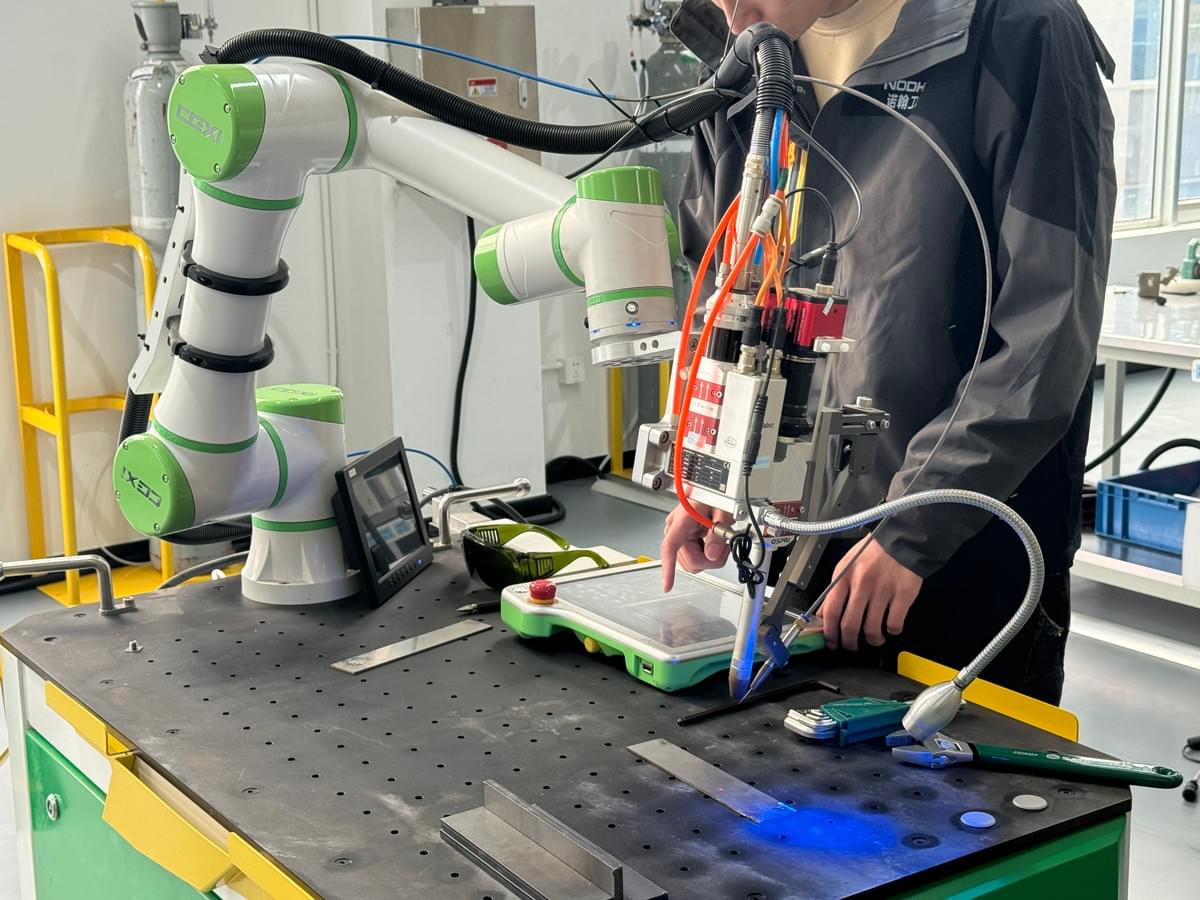
Real Case
One of our Israeli customers has adopted ReadyOn collaborative welding robots for their metal frame and mechanical component production lines. Before introducing our cobot welding stations, the factory was troubled by local high welder salaries and frequent worker turnover.
The factory adopted a matched production mode: ReadyOn cobots are responsible for large-batch standardized workpiece welding to guarantee stable output and unified weld quality; senior local welders focus on new product sample welding, abnormal welding problem disposal and fine repair of finished weld seams.
After half a year of operation, the workshop’s overall production efficiency increased by nearly 50%, the product defective rate dropped sharply, and the enterprise’s long-term labor expenditure was effectively controlled. This hybrid matching mode perfectly combines the stable efficiency of automatic equipment and the flexible experience of manual welding.
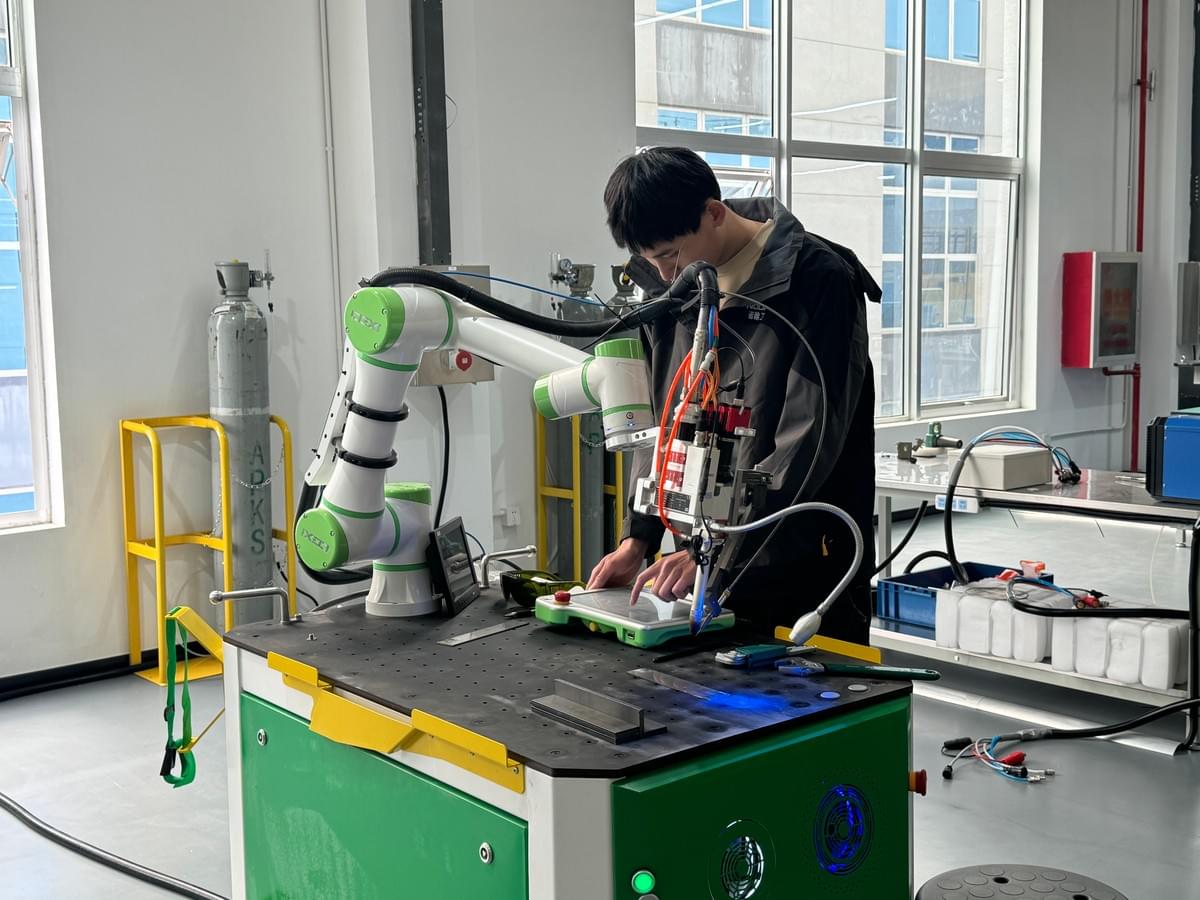
Conclusion
ReadyOn cobot welding are advanced production tools that liberate welders from heavy, dangerous repetitive work, rather than total substitutes for manual welders.
The most economical and reliable operation logic for modern processing factories is cobot mass stable production + skilled welders for process development & on-site exception management. Enterprises can give full play to the strengths of both automated equipment and manual technology to maximize workshop operation benefits.
CTA
ReadyOn cobot welding adopt intuitive drag teaching operation logic, which local veteran welders can master proficiently within a short training period. If you are struggling with welder shortage, unstable welding quality or rising labor costs, send your workpiece drawings and daily production data to our technical team. We will customize a targeted cobot welding workstation solution for your factory for free.
Another:What pain points have you encountered when balancing manual welding and automated welding equipment? Please leave your experiences and opinions in the email, and our professional engineers will reply to you one by one.